Dr. Meaney tackles the difficult topic on prenatal testing and how that stands in regard to ethical healthcare.

Dr. Meaney tackles the difficult topic on prenatal testing and how that stands in regard to ethical healthcare.
Dr. Meaney tackles the difficult topic on whether or not keeping a human brain alive artificially after death for scientific research is ethical or not.
Dr. Meaney tackles the difficult topic of laxism and rigorism, understanding the two topics and how they fit into Catholic bioethics.
November is National Hospice and Palliative Care Month, a time to reflect on one of the most sacred duties of healthcare: accompanying individuals and families through serious illness and the final stages of life with compassion, dignity, and hope.
Dr. Meaney tackles the difficult topic of ectopic pregnancies and discussing the moral struggle of trying to save the life of an embryo in these difficult situations.
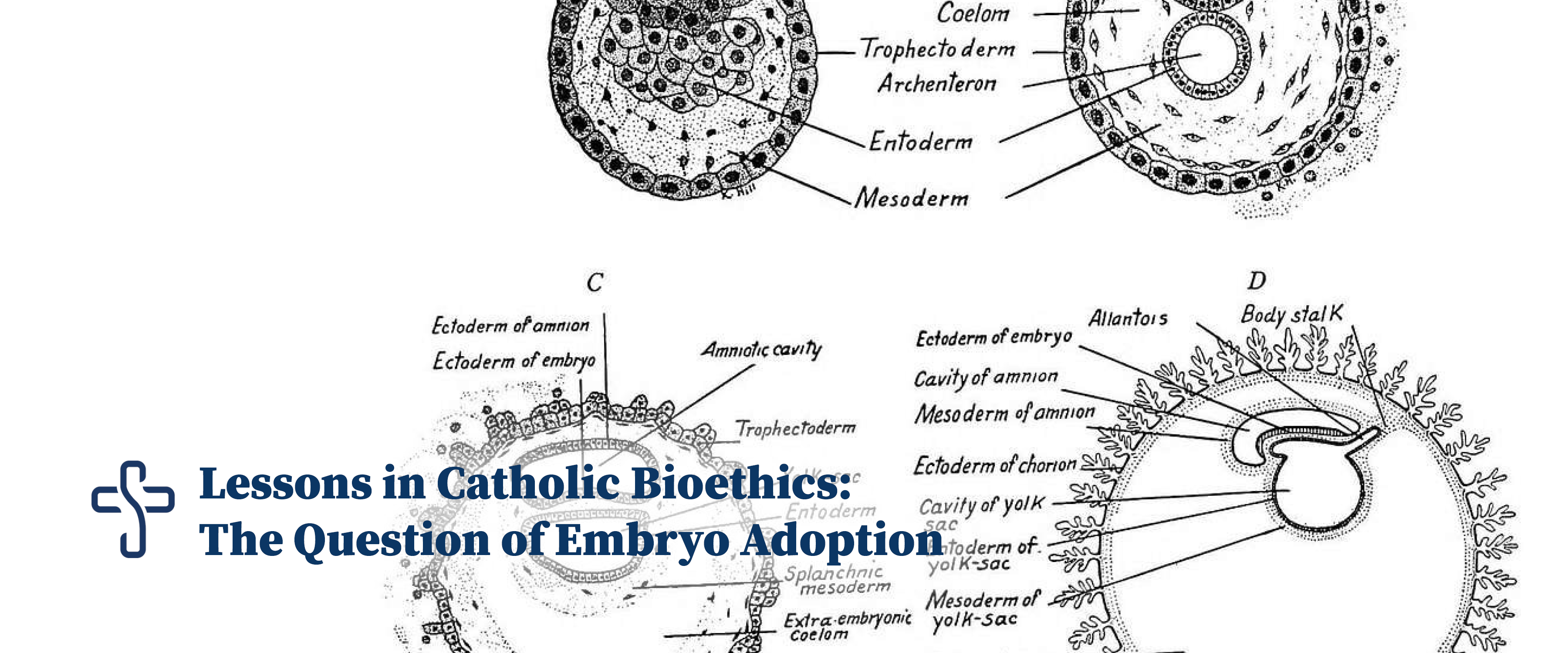
Dr. Meaney tackles the difficult conversations surrounding human embryo adoption and where it stands in Catholic Church beliefs.
Something often misunderstood by secular thinkers is that faithful Catholics and others with rightly formed consciences can never engage in formal cooperation with the evil actions of another person. Recently, a court in Illinois ruled that “if patients request abortions, at a minimum, the State can require medical professionals to provide information of other medical professionals whom they reasonably believe might perform abortions.”
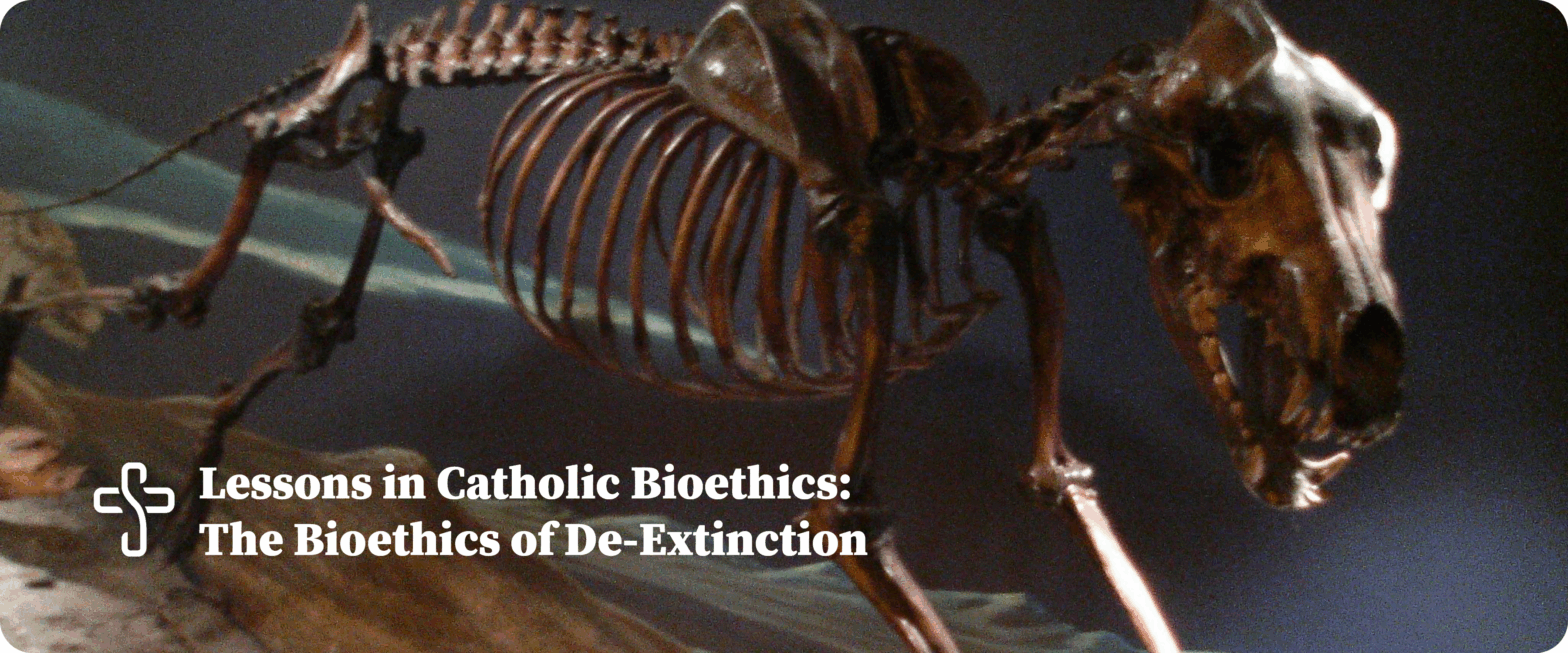
De-extinction, using genetic technology to bring back to life an extinct species, is now a possibility, and the bioethical questions surrounding this practice are therefore more urgent. Colossal Biosciences made headlines with its “resurrection” of the dire wolf recently after an estimated 10,000 years of extinction. The laboratory used AI-enabled genomic mapping, sophisticated gene-editing techniques, and cloning to create a wolf that is an approximate phenotypical match of the extinct dire wolf.
De-extinction, using genetic technology to bring back to life an extinct species, is now a possibility, and the bioethical questions surrounding this practice are therefore more urgent. Colossal Biosciences made headlines with its “resurrection” of the dire wolf recently after an estimated 10,000 years of extinction. The laboratory used AI-enabled genomic mapping, sophisticated gene-editing techniques, and cloning to create a wolf that is an approximate phenotypical match of the extinct dire wolf.
by Joseph Meaney, PhD, KM, for the National Catholic Bioethics CenterMarch 18, 2025There is perhaps no bioethical topic more hotly debated among Catholics than the morality of adopting frozen embryos. This issue arose after the unequivocal condemnation of the practice of in vitro fertilization (IVF) by the Instruction Donum Vitae issued by the Congregation for… Continue reading Lessons in Catholic Bioethics: The Question of Embryo Adoption